Health AI SaaS · 09 / 11 · web application
AI patient profile dashboard
The member profile a health coach works from: today's task on top, and the card it's about lit underneath.
- On one screen
- About 40 readings
- Tabs per review
- 9 → 3
- Doctors using it
- 11 of 14
- Find a reading
- About 10 s
Overview
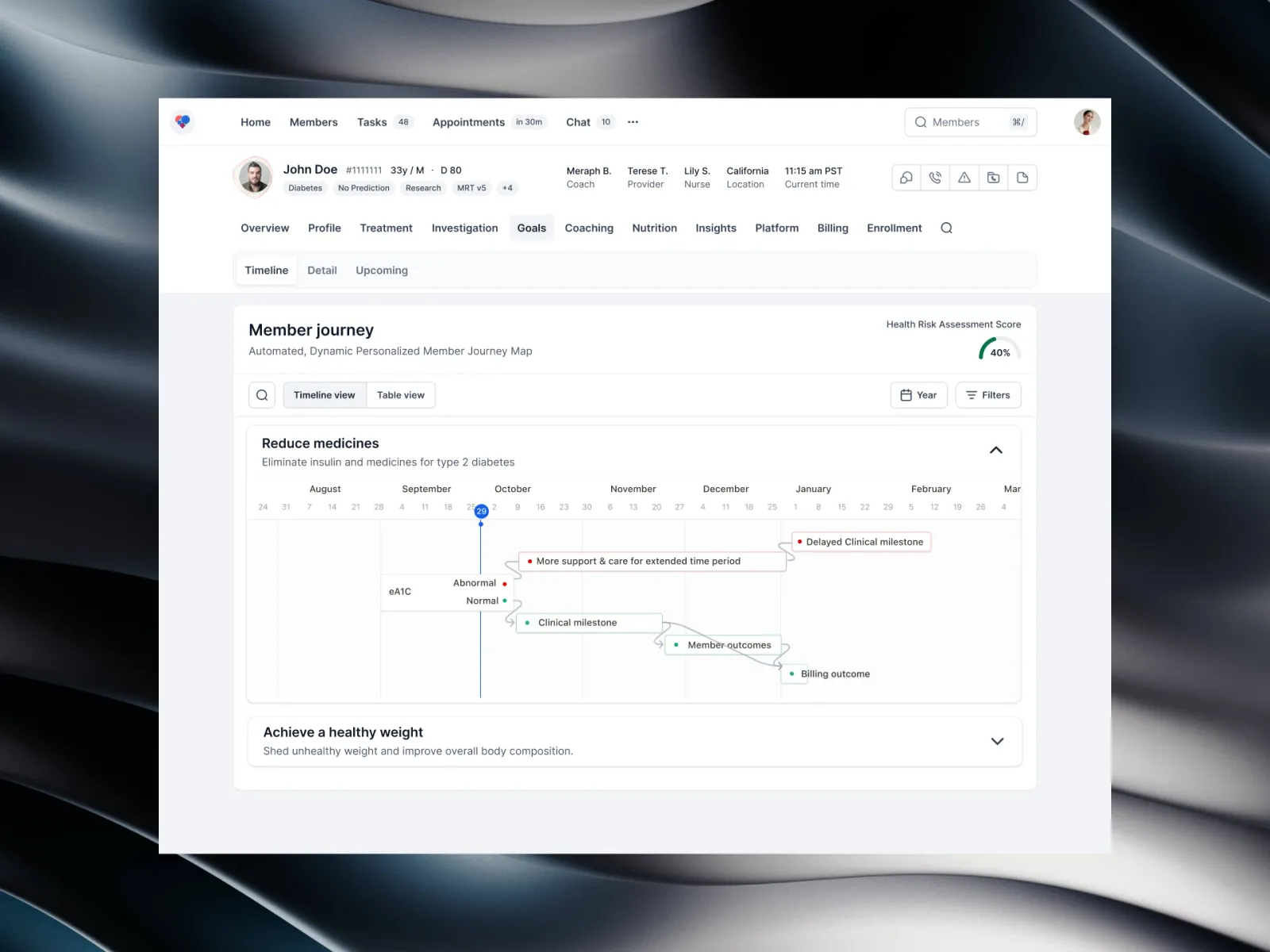
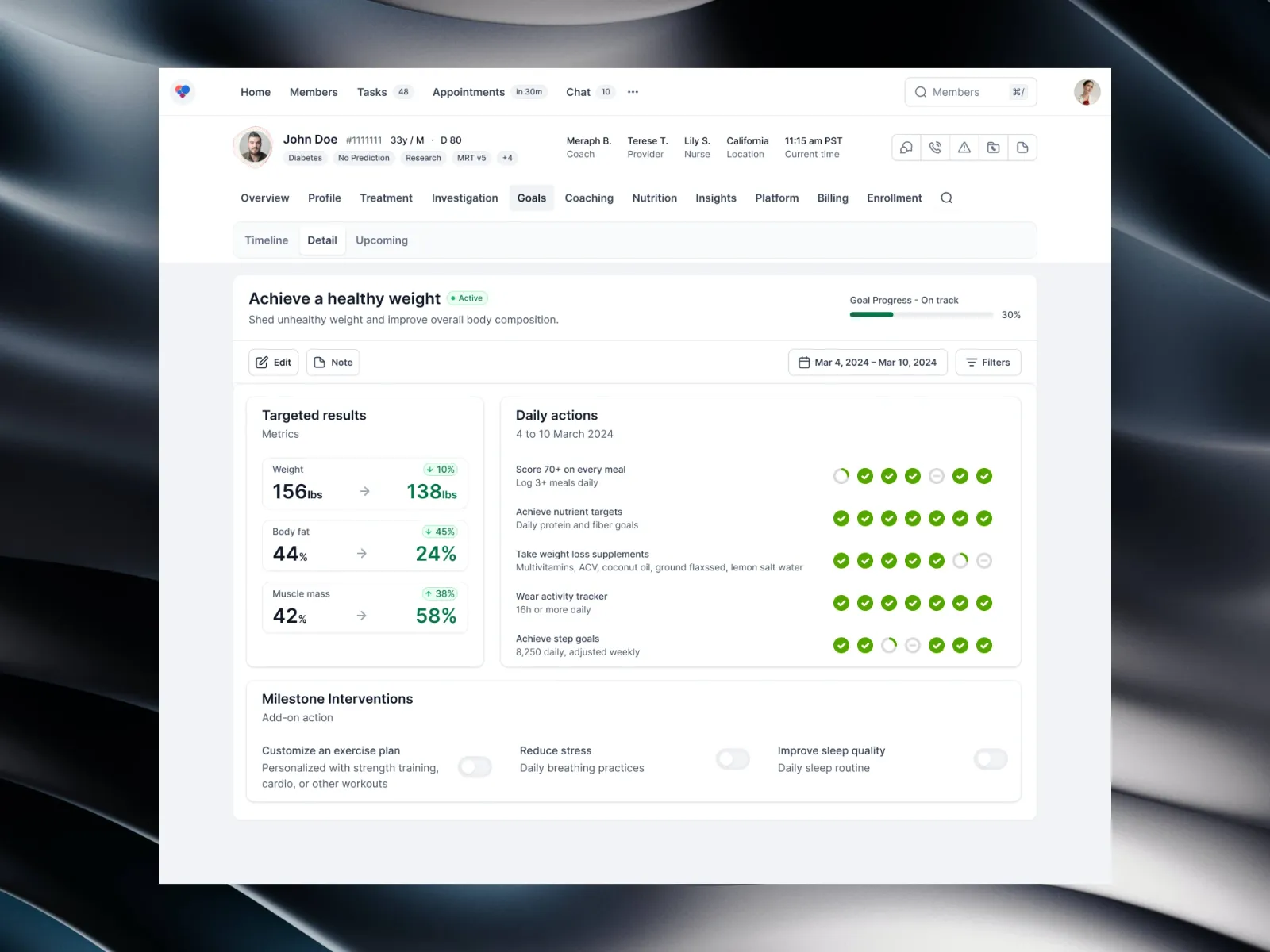
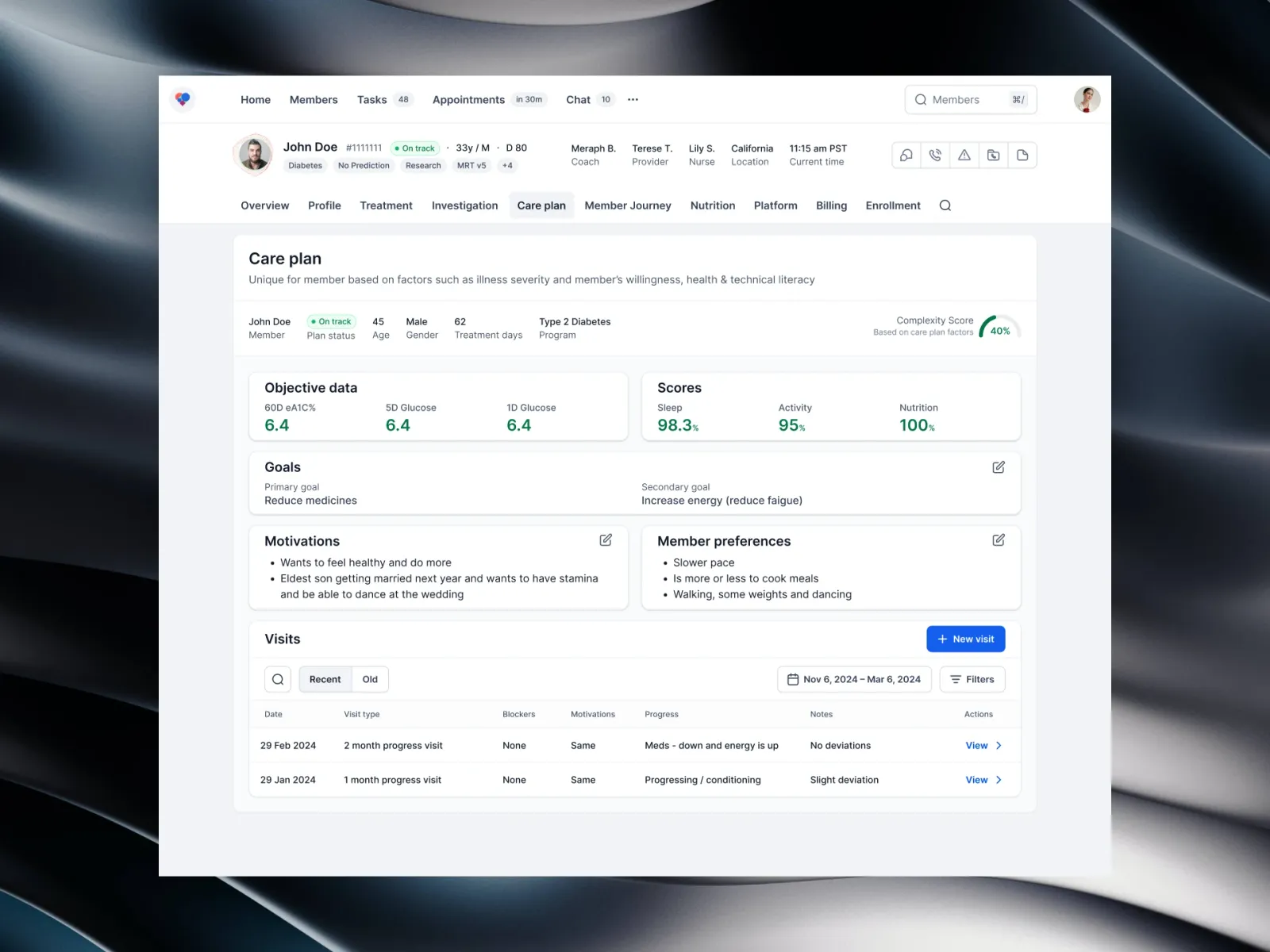
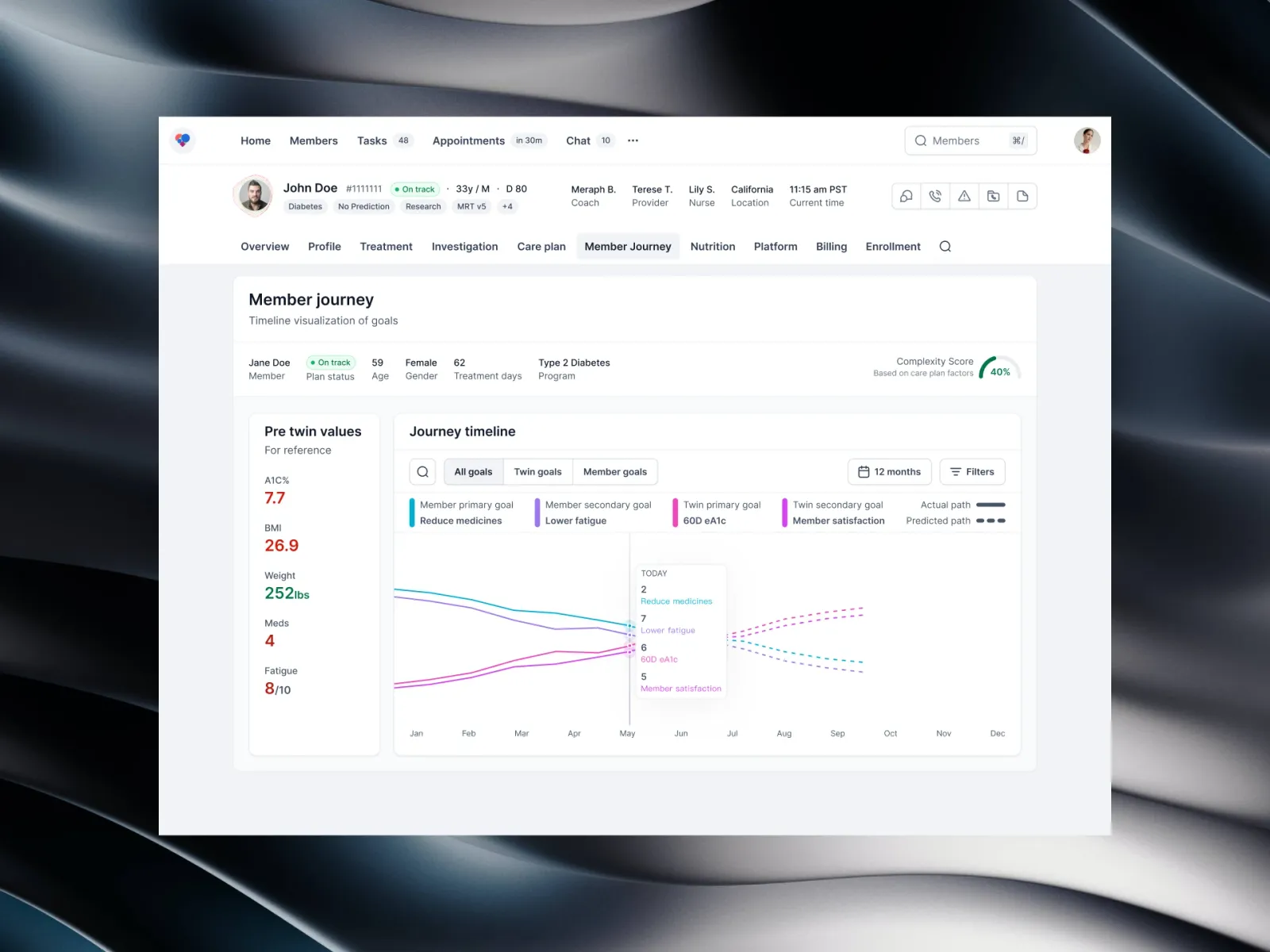
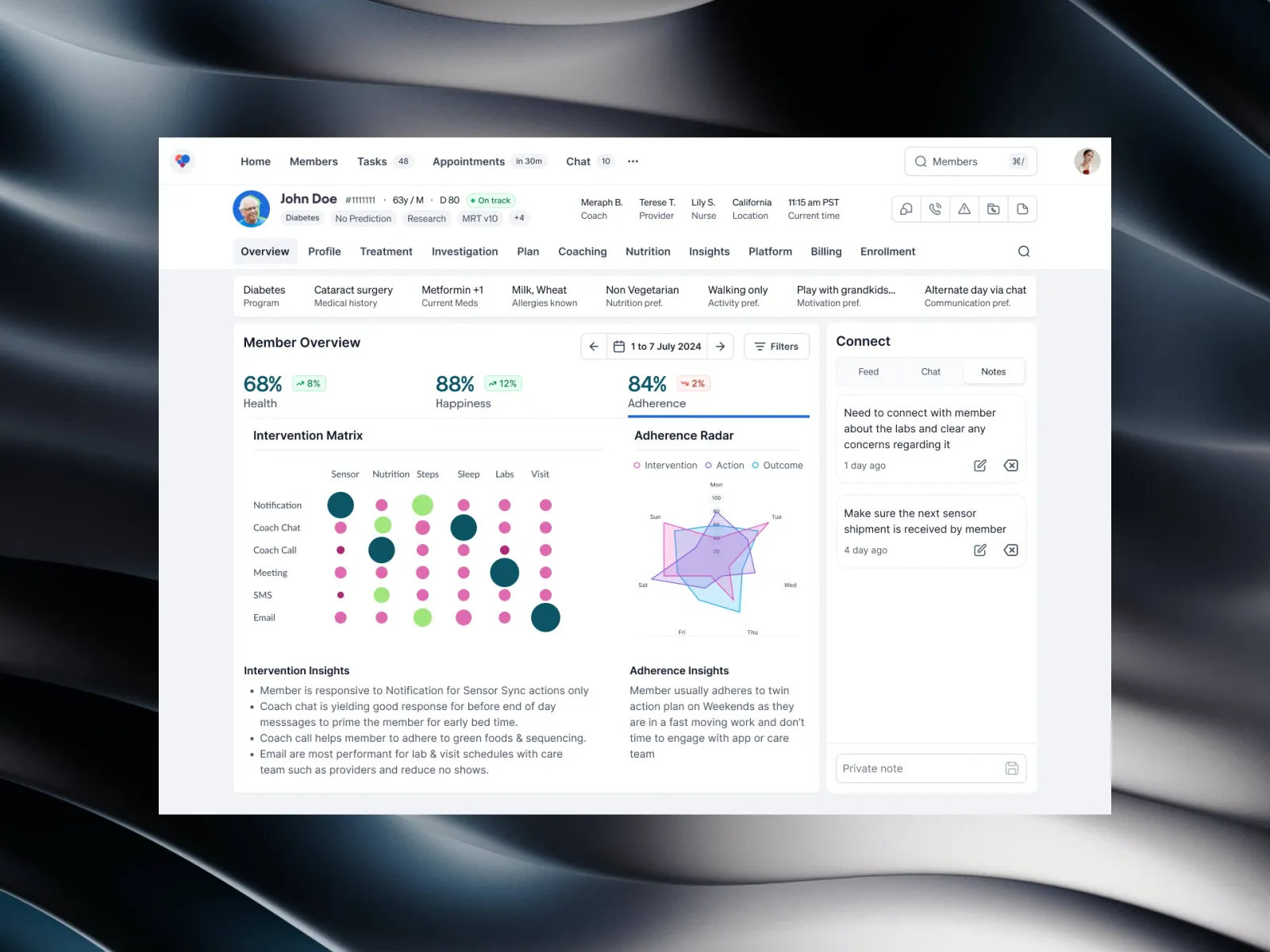
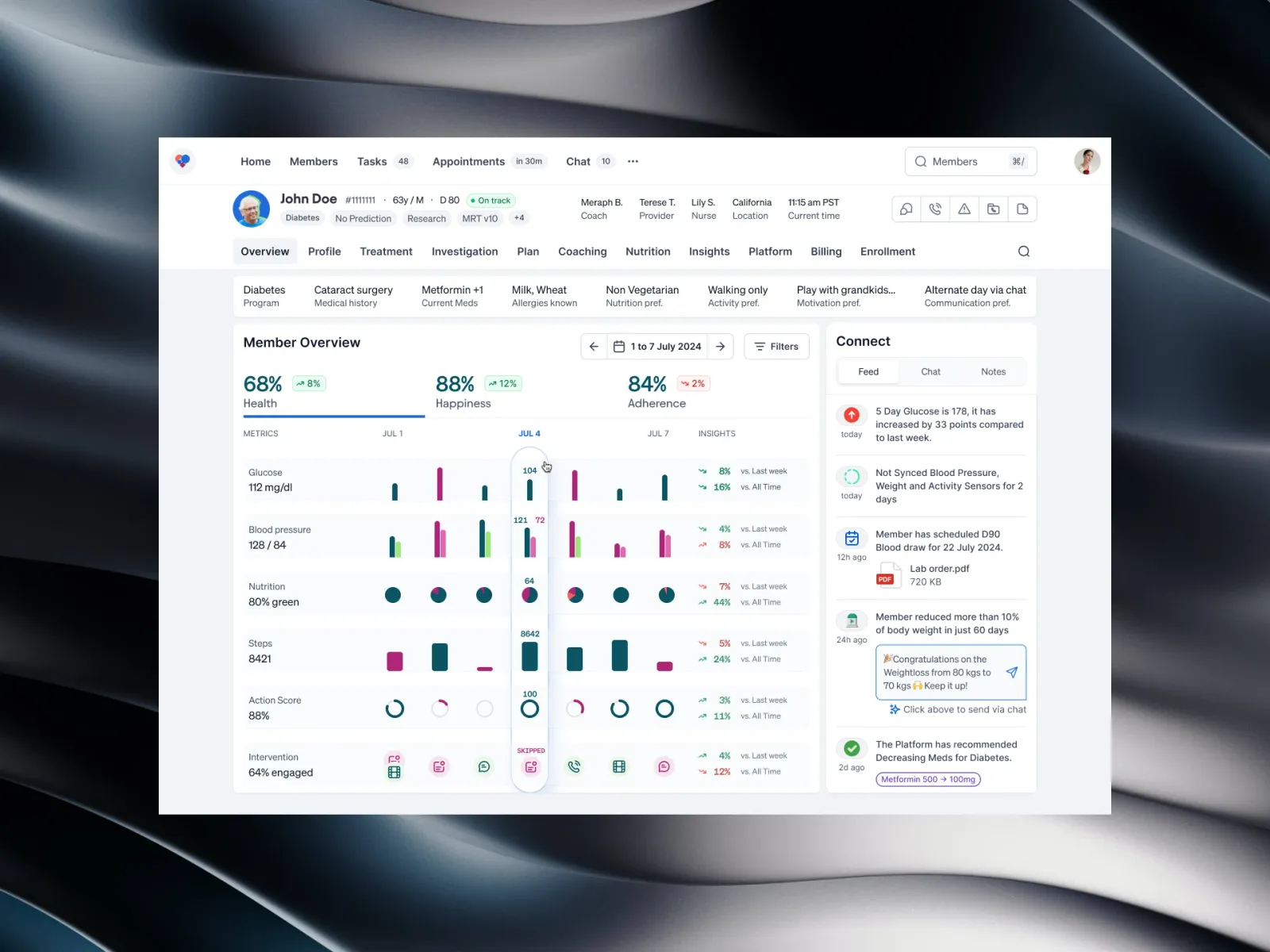
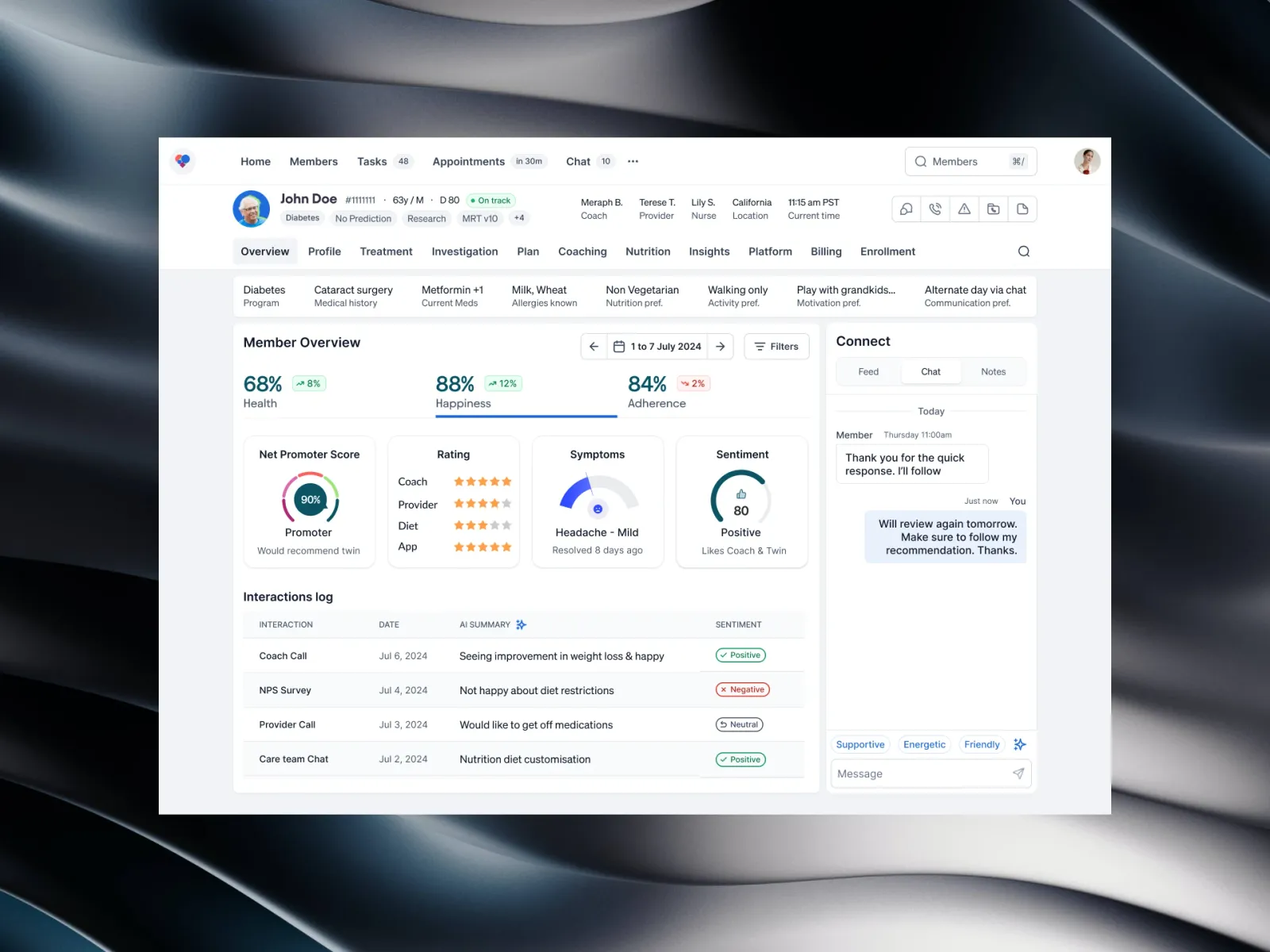
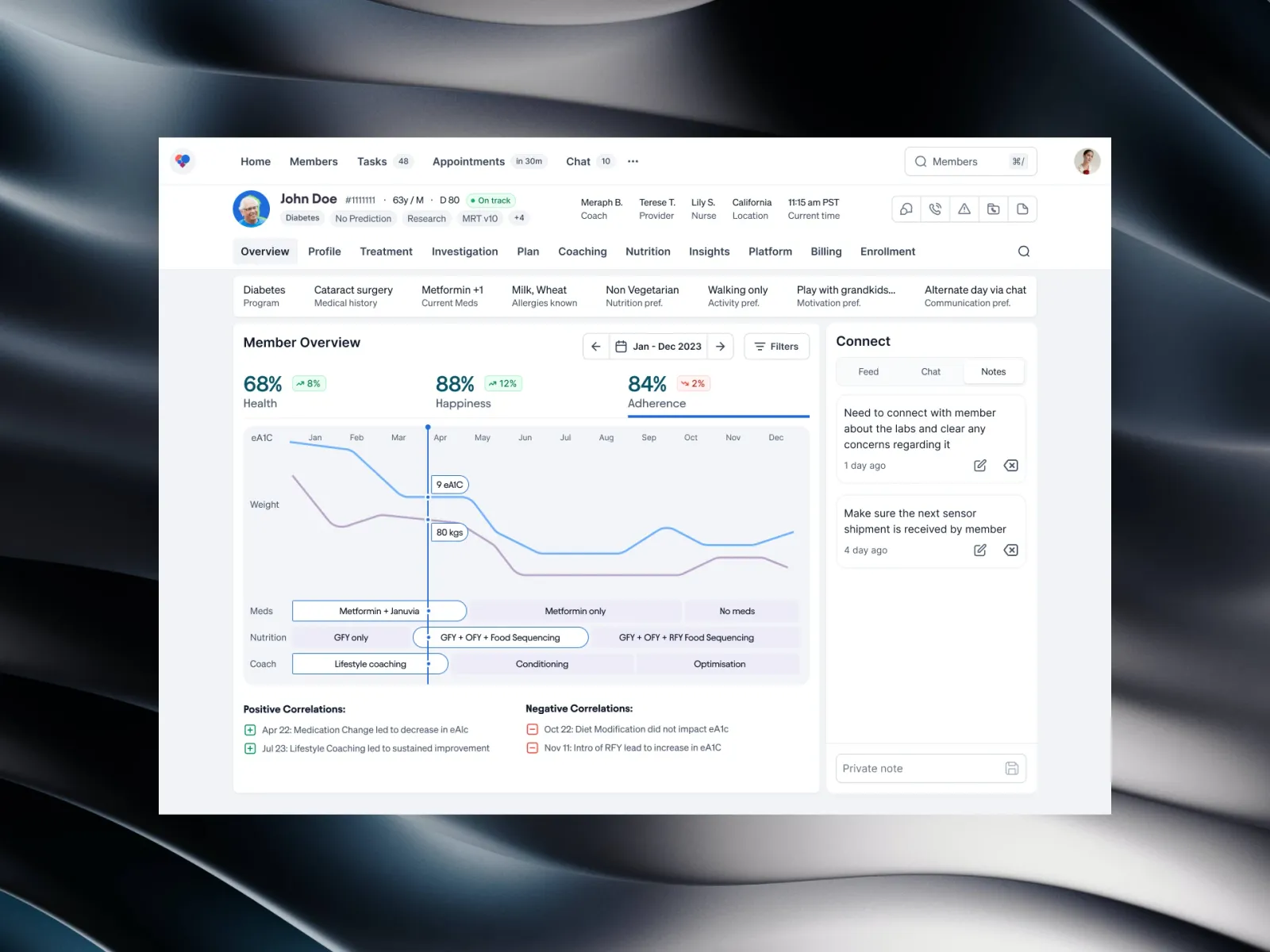
This is the member profile a Twin Health coach works from: one screen with a member's glucose, metabolic score, activity and body composition, and — on top — the coach's own work for that member today. Coaches, providers and nurses all use it; it's designed around the coach, who opens it most.
The problem: Coaches look after a lot of members, and the data about each one was spread across several apps. Spotting a trend, deciding who to call first and having a conversation backed by data all meant hunting first.
What we built: A profile that reads top to bottom in the order a coach thinks. A task bar says what to do and why, with Chat, Mark as done and Next task. A header says who this is and who else is looking after them. Four cards answer how are they now, and over time? And the task decides which card is lit — a review lights glucose, a missed walk lights activity, a milestone lights the score — so the eye lands where the conversation will start.
Who it's for:
- Primarily: health coaches, care providers, nutritionists and nurses.
- Also: members, who see their own data in a different app.
John Doe
Five days of readings since the last check-in.
Today's average121 mg/dL
↑ 30 since joining
Moves slowly, on purpose
- Glucose
- 34 / 40
- Insulin sensitivity
- 22 / 25
- Weight
- 18 / 20
- Blood pressure
- 16 / 15+
Active minutes22 / 30
Calories1,620 / 2,100
Steps3,840 / 7,000
Weight
198 lb
↓ 7.3 since joining
BMI
28.4
↓ 1.0
Muscle
41%
↑ 1%
Body fat
29%
↓ 2%
Five questions, top to bottom
In the prototype above, step through the tasks with Next task and watch which card the page lights. Scrub the glucose chart to read an hour.
The questions a coach needs answered at a glance:
- What do I need to do next? The task bar.
- Who am I looking at? The member header.
- How are they doing right now? The cards.
- How have they been doing over time? Averages and a score that moves slowly.
- How do I dig deeper? Cards that open, so nothing needs a new tab.
The task bar
It turns the profile from a place to look into a queue to work through: Review · 1 day ago, a line on why the task exists, and three actions. Chat opens a message already drafted from the task, which the coach edits rather than writes.
The member header
Age, gender and member ID; the conditions (Diabetes) and programme (Research MRT v5) that change how the numbers should be read; and the care team — coach, provider and nurse — by name.
Four cards
- Blood sugar: the day against the target band, with today's and the five-day average. It's the biggest card because, for a member with diabetes, it's where most conversations start.
- Metabolic health: one score — 90, up 30 since joining — that opens into what it's made of. It moves slowly on purpose, so it rewards habits, not single good days.
- Activity: active minutes, calories and steps, each against a goal.
- Body composition: weight, BMI, muscle and body fat, with change since joining (weight down 7.3).
Visual design
Blue for actions, green for progress, warm tones for activity, so the kinds of number are told apart before they're read — and labels throughout, so none of it depends on colour. Clear type hierarchy separates titles, labels and values; generous space and defined card edges keep a dense screen calm.
What it's for
- Coaches: less time hunting, quicker to see who needs attention, and conversations that start from the member's own data.
- Members: more personal support, which is what keeps people on the program.
- The program: more members per coach without longer days.
Conclusion
The profile holds a lot of data, but it doesn't ask the coach to read all of it. It asks one question at a time, in the order a coach would, and lets the task of the moment decide where to look first.
Gallery
01 / 12The profile — The coach's task on top, the member underneath.