Behavior Loop · 02 / 05 · behavioral design · ux research · Mobile
Behavioral Feedback Loops
The rules behind how the app answers what members do: praise, streaks, a way out after a risky meal — and a real coach after three silent days.
Overview
This is the research and the rules behind how Twin Health's app responds to what members do — logging meals, wearing sensors, walking, taking supplements — over months. It's built on a framework we called OMMK (Outcome, Method, Measure, Kaizen) and a closed-loop engine that chooses what to say, when, and whether the app should say anything at all.
The problem: Health apps tend to fall off an "adherence cliff" around week three. One bad meal or a sensor that won't sync, and people stop logging altogether — out of guilt, frustration or a feeling they've failed. Generic reminders and badges made it worse: notifications people learn to ignore.
What we built: A loop instead of a schedule. Every action is evaluated against the member's own data and history; the response is chosen from what has worked for them; and the tone adapts — praise when they're consistent, something to do instead of a verdict after a risky meal, and, after three days of silence, no more app reminders at all, but a message from a real coach.
Who it's for:
- Primarily: members building daily habits to reverse metabolic disease.
- Also: health coaches, behavioural scientists and the growth engineers tuning retention.
App reminders muted. Coach alerted: “Hi Nina, just checking in to see how your week is going — no pressure on logging, we're here for you.”
D1+Morning weight, medicines
D3+Blood pressure, glucose sensor, breakfast
D10+All meals, supplements
D20+Walks after meals, breathing, short fasts
The loop, running
The simulator above is the engine on thirty days of one member. Select a day to see what fired; select it again to change what she did.
Three constraints shaped the rules:
- Shame. Many members carry decades of guilt about food and weight. A red warning after a high-carb meal makes people hide data, not change.
- Fatigue. Twenty data points a day without an obvious reason to give them is exhausting.
- Frequency. Too many messages and people stop hearing them; too few and no habit forms. How often, when and how to say it had to be learned from each member's responses.
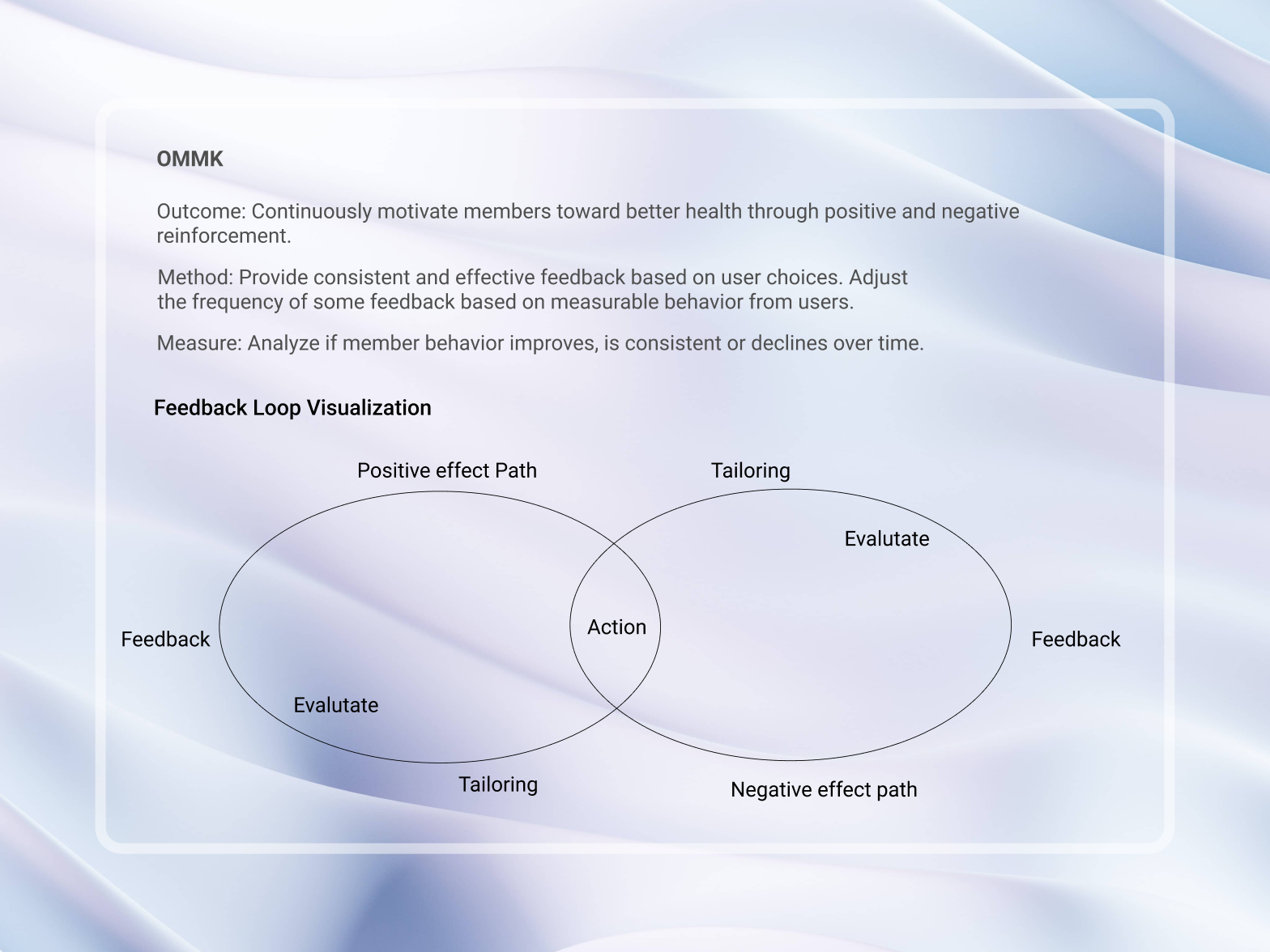
OMMK
- Outcome: keep members moving towards metabolic health they can sustain on their own.
- Method: immediate, specific feedback on what they chose, with the frequency and tone adjusted to how they respond.
- Measure: whether adherence is improving, holding or slipping, over 7, 14 and 30 days.
- Kaizen: keep testing the rewards, the wording and the micro-lessons, and keep what lowers friction.
The rules
Meals
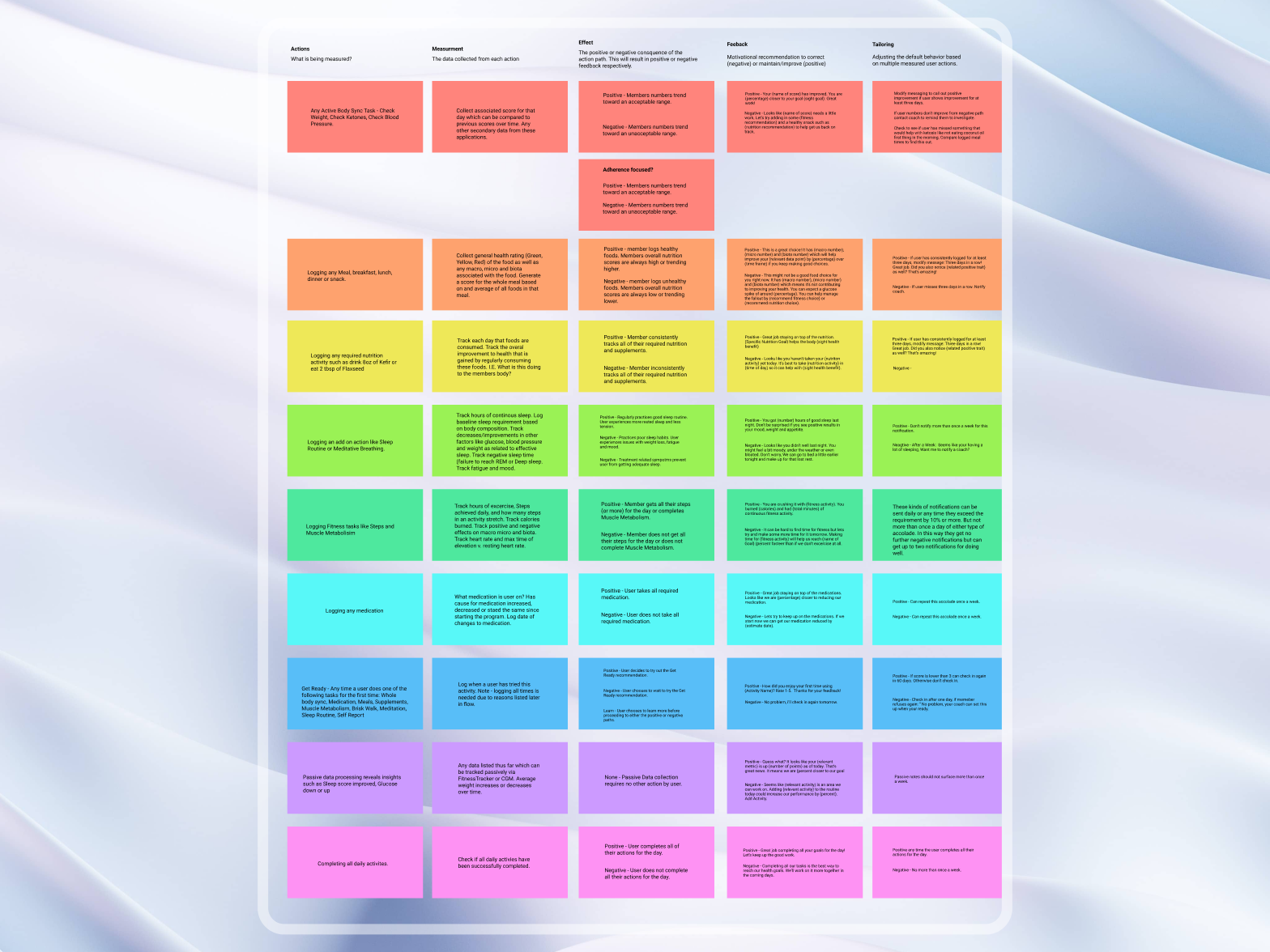
- A good meal: immediate, physical validation — "Great choice! The fibre in this will steady your glucose and help you avoid an afternoon slump."
- Three days in a row: the streak is pointed out, and linked to a result — "Three days in a row, Nina. Notice how your morning fasting glucose has come down?"
- A high-carb meal: no judgement, a way out — "This may raise your glucose by about 40 mg/dL. A brisk 10-minute walk or a glass of lemon water in the next 30 minutes will help."
- Three days without logging: the app goes quiet. The member's coach gets an alert and writes — "Hi Nina, just checking in to see how your week is going — no pressure on logging, we're here for you."
Sensors
- Weight: a seven-day rolling average rather than daily swings, so the scale doesn't become a source of anxiety, with fat loss celebrated over the raw number.
- Glucose: small, immediate links between how she feels and her curve, so she learns her body's signals without staring at the screen.
Habits, layered
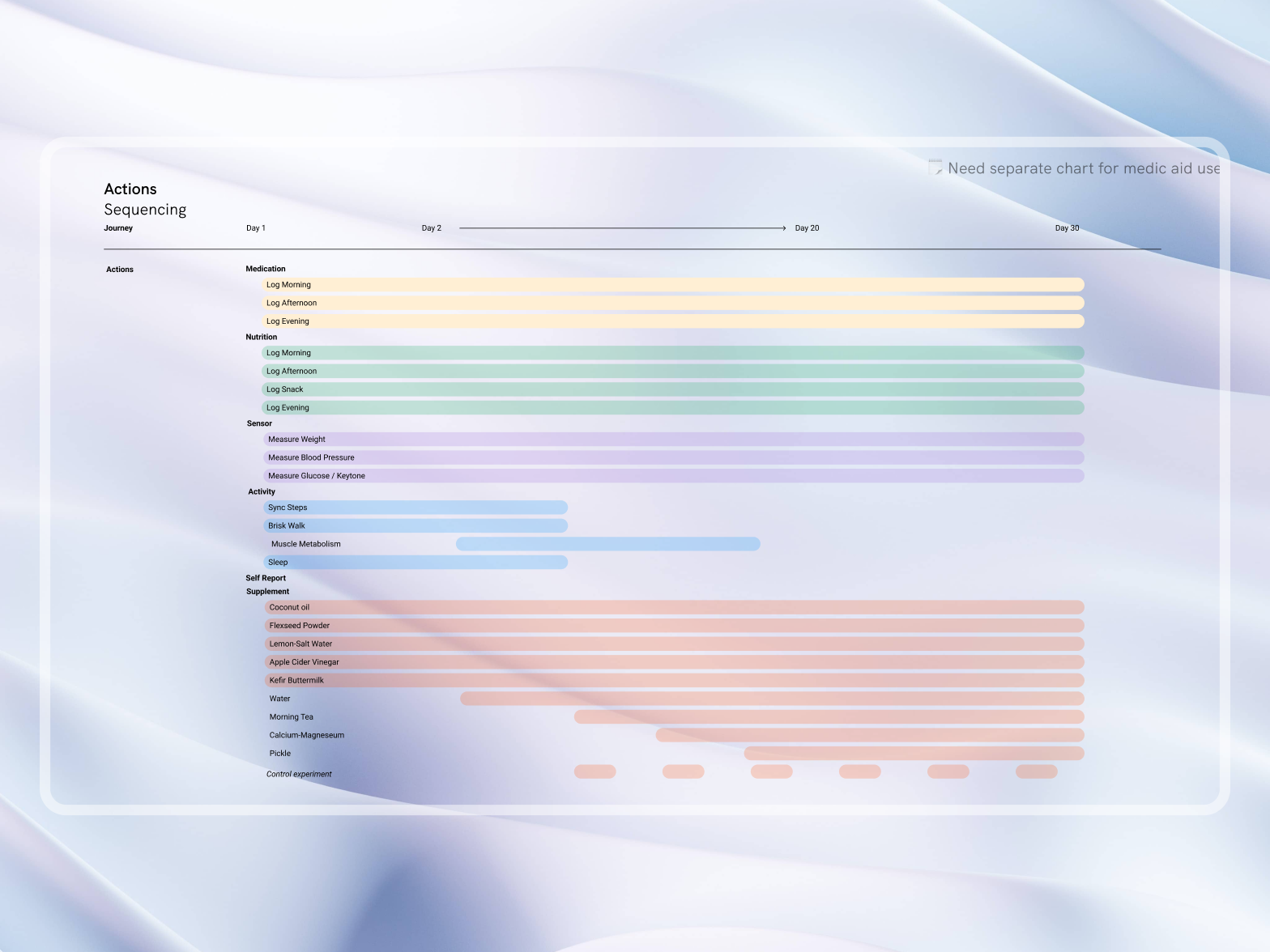
Habits can't all start at once. Each layer begins when the one before it runs on its own:
- Days 1–2: morning weight and medicines. No diet changes.
- Days 3–10: blood pressure, the glucose sensor and breakfast logging.
- Days 10–20: every meal, and supplements.
- Days 20–30 and on: walks after meals, breathing exercises and short fasts.
Results
- Habits: logging at 30 days reached about 55%, up from about 35%.
- Coming back: about half of members who missed a day or two were logging again within 48 hours.
- Notifications: opt-outs fell by about a fifth once reminders adapted to how people responded.
- Glucose: members on longer streaks had steadier glucose — though they were probably the more motivated members to begin with.
Conclusion
Habits held when the app stopped behaving like an alarm. It answered each action with something specific, never scolded, added one habit at a time — and knew when to step aside and let a person call.
Gallery
01 / 03From the gallery