Behavior Loop · 01 / 05 · user experience research · ux research · Mobile
Member Experience Mapping
A persona, a six-stage journey and an atomic experience matrix that re-paced members' first month — and lifted 30-day retention from 68% to 76%.
- Interviews
- 24 members
- Personas
- 2 cohorts modeled
- Drop-off Risk
- Days 0–10 isolated
- Journey Arc
- 6 macro phases
Overview
This is the research behind how Twin Health's member app paces a person through reversing Type 2 diabetes — a persona, a six-stage journey map with its emotional arc, and an atomic experience matrix that turns every in-app action into requirements, feelings, delights, pains and design opportunities.
The problem: The program used to treat diabetes management as a list of compliance tasks. In the first month members were asked to do everything at once — fingersticks, sensors, a new way of eating — without understanding why their bodies were responding the way they were. Many were overwhelmed, and the first ten days were where most of them left.
What we did: We built the program around one persona, Nina Graham, and mapped her journey from sign-up to long-term maintenance. Then we went a level deeper: for every action in the app, the matrix records what it asks of her, how she feels doing it, what would delight her and what would make her stop. That research re-paced the first month — devices one at a time, food observed before it's changed — and the matrix became the product team's working spec.
Who it's for:
- Primarily: adults with Type 2 diabetes and hypertension looking to reverse it without medication.
- Also: care coaches, endocrinologists and behavioural psychologists who look after members' emotional health alongside their glucose.
Nina Graham, 55 · sales manager · Type 2 for 10+ years · hypertension
- Does
- Care box arrives; scale, cuff, ketone meter and glucose sensor; first care-team visit.
- Feels
- Overwhelmed and anxious
- Delight
- The first reading that makes sense of a meal.
- Pain
- Five devices and logging, all at once.
- What we changed
- Devices introduced one at a time over three weeks; a specialist on video for the sensor.
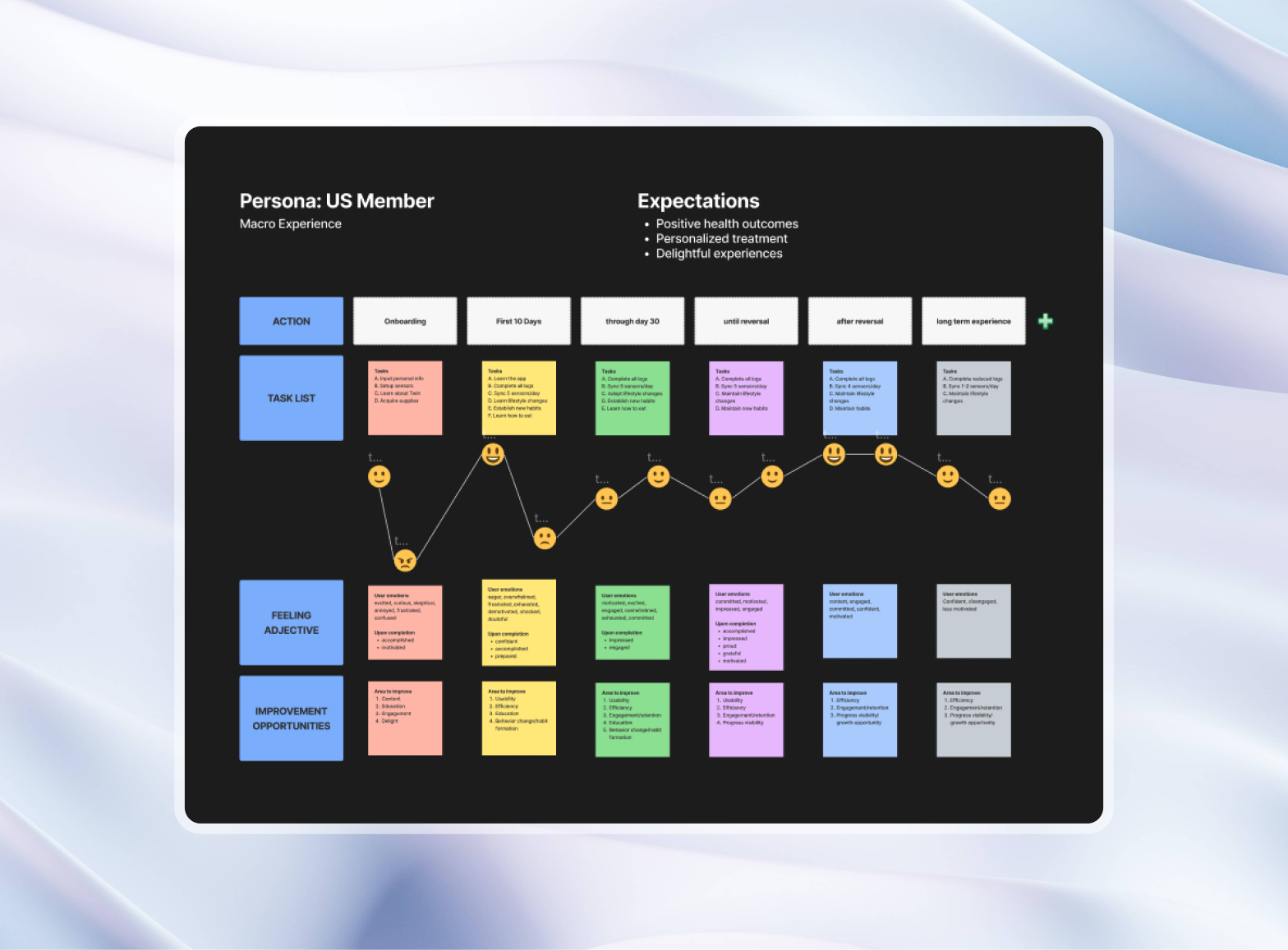
The journey, by stage
The map above is the research as an instrument. Pick a stage to open its row of the matrix; switch to the re-paced program and watch the first ten days come up.
We ran 24 member interviews and 16 two-week diary studies across the United States. Three tensions came up again and again:
- Fear of complications. Members live with a constant dread of neuropathy, kidney failure or losing their sight — and still find daily medicines and restrictive diets exhausting.
- Days 0 to 10. The highest drop-off risk: a smart scale, a blood pressure cuff, a ketone meter and a glucose sensor to set up, while starting to log every meal.
- Diet dogma. Decades of conflicting advice — low-carb, low-fat, keto — meant a new protocol only landed after their own habits had been taken seriously.
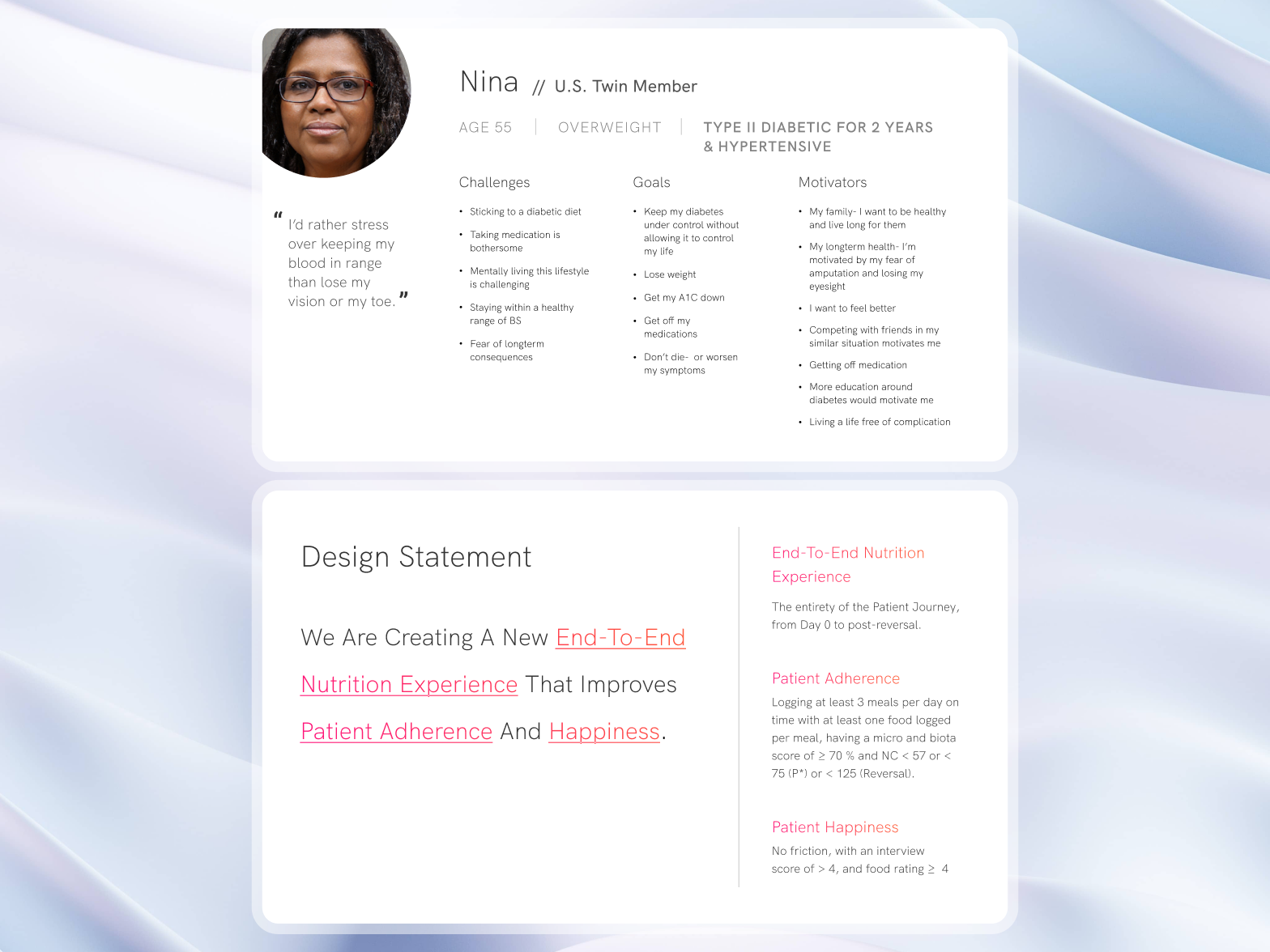
Nina Graham
- Who she is: 55, a sales manager in Sunnyvale, married with two children, moderately confident with technology.
- Her condition: Type 2 diabetes for more than ten years, with high blood pressure and a raised BMI.
- In her words: "I'd rather stress over keeping my blood in range than lose my vision or my toe."
- What moves her: staying healthy for her family, coming off daily medicines, a little friendly competition, and having energy again.
Six stages
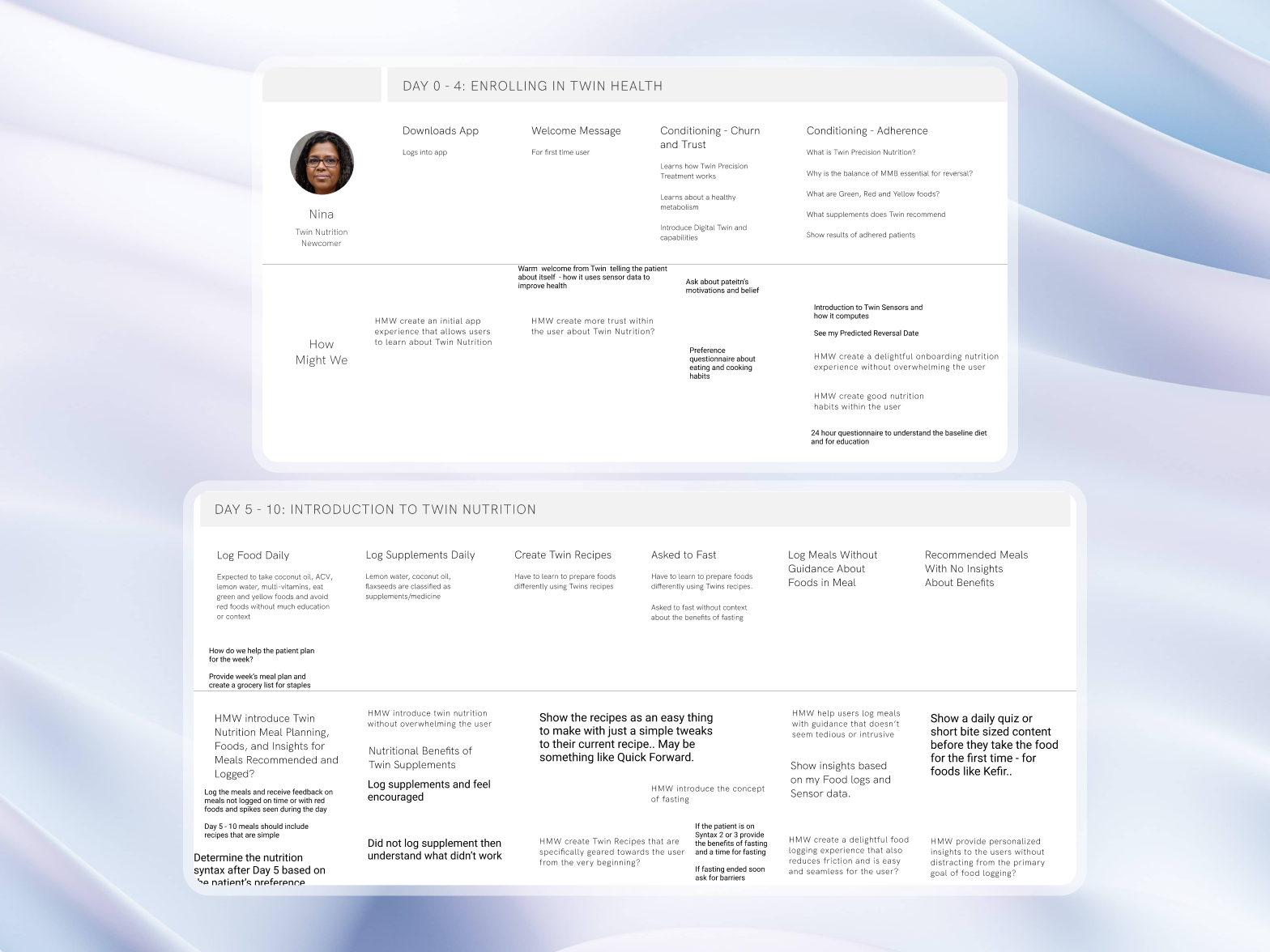
- Onboarding (days 0–4): account, eligibility checks, labs, address. Curious but apprehensive.
- First 10 days: the care box, sensor pairing, a 24-hour food recall and the first care-team visit. Overwhelmed and anxious.
- Through day 30: green, yellow and red foods, full meal logging, numbers starting to settle. Cautiously optimistic.
- Until reversal: habits hold and the doctor starts reducing medicines. Delighted and empowered.
- After reversal: HbA1c under 6.5% without medicine. Confident and fulfilled.
- Long term: periodic check-ins and mentoring newer members. Resilient and self-sufficient.
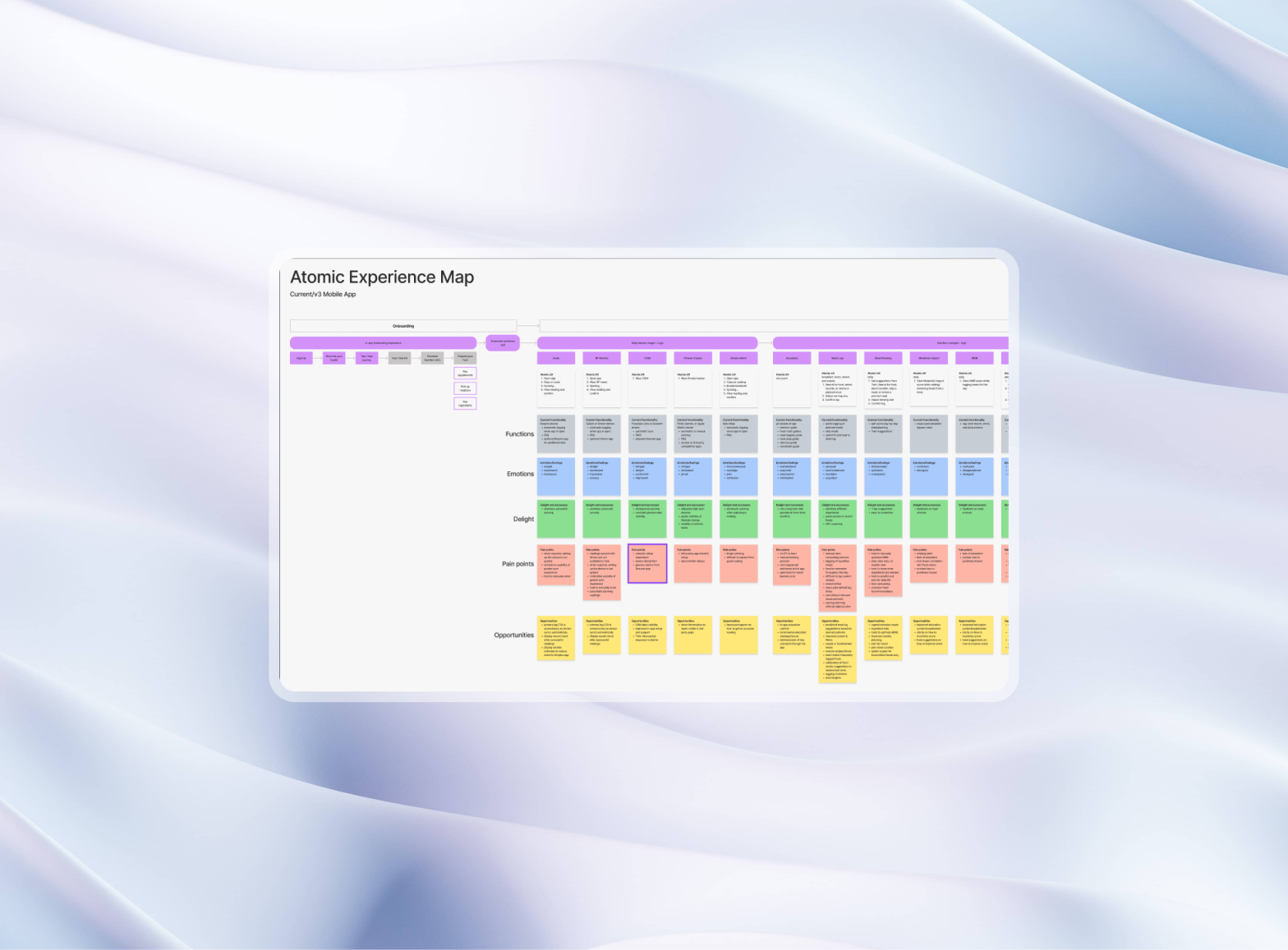
The atomic experience matrix
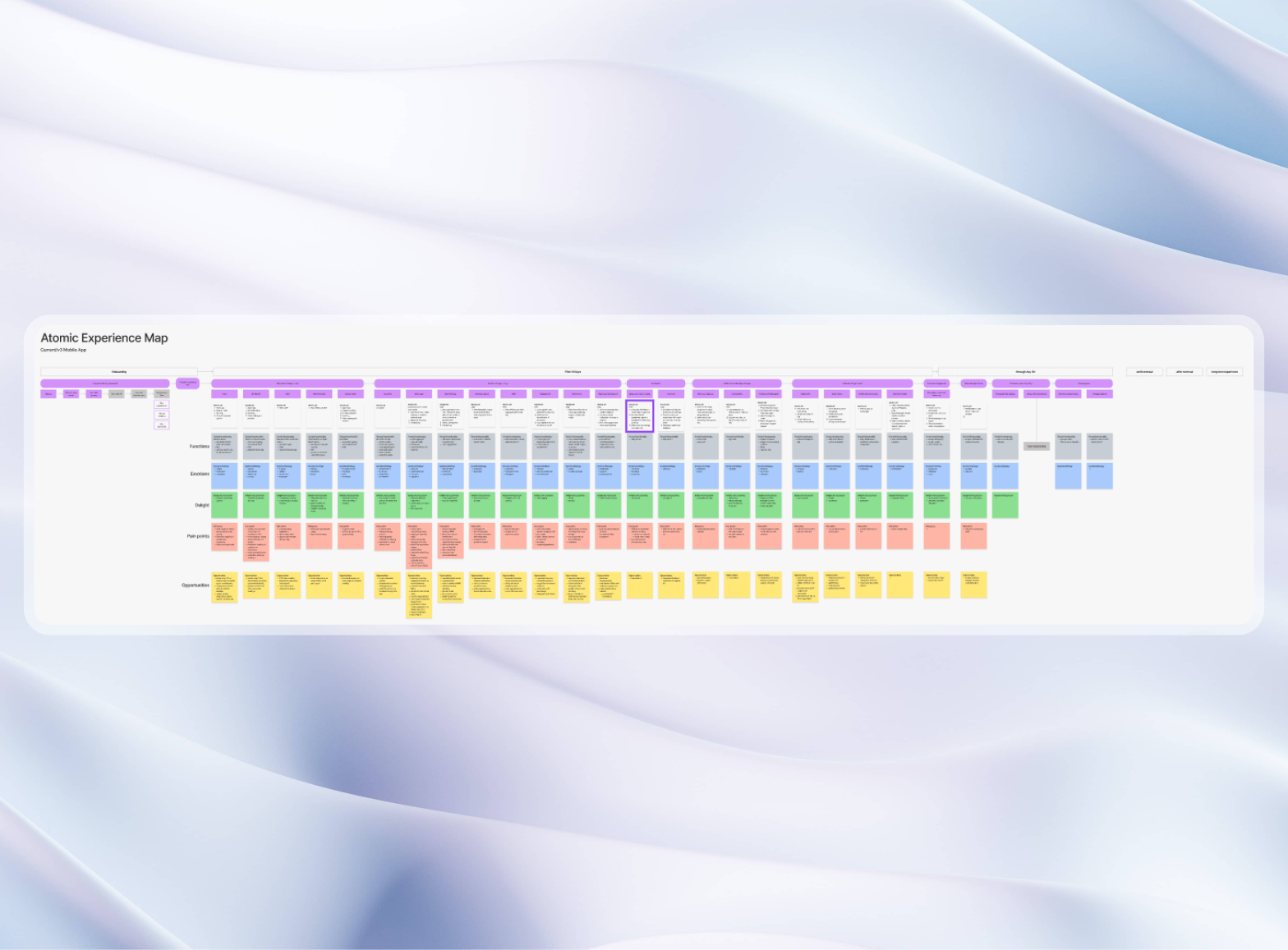
For every action in the member app, the matrix records five things:
- What it requires — the hardware and software involved: a scale syncing over Bluetooth, a sensor scan, a photo of a meal.
- How it feels — frustrated when Bluetooth drops, anxious at a high fasting reading.
- What delights — the small, immediate rewards: a three-day logging streak, a chip showing a spike that came down.
- What hurts — the mechanical and emotional friction that makes people stop.
- What we can do — background Bluetooth retries, a short video at the moment it's needed, a coach reaching out first.
Nutrition for newcomers
What a member eats predicts reversal better than anything else, and forcing a strict meal plan on day one drove people away. The newcomer journey paces it:
- Observe first (days 0–4). A no-judgement 24-hour food recall for four days. It builds the logging habit and gives the model a baseline.
- Swaps, not bans. Cauliflower rice for white rice; a little healthy fat to soften a spike — favourite meals adjusted rather than forbidden.
- Show the cause. When Nina saw a short walk after a meal take 35 mg/dL off her spike, logging stopped being a chore and became curiosity.
Results
- First month: 30-day retention rose from 68% to 76%, mostly by spreading device setup out instead of asking for everything on day one.
- Logging: about 60% of active members logged three meals a day.
- Clinical: average HbA1c fell by about 1.1 points over 90 days, and about half of members reduced or stopped at least one diabetes medicine, with their doctor's sign-off.
- Satisfaction: member NPS reached +76, with coaching and clear progress the reasons given most.
Conclusion
The map earned its keep by not staying a poster. Its stages set the pace of the first month, and its matrix became the spec engineers built against — so the place members were most likely to give up became the place the product was most careful.
Gallery
01 / 05From the gallery